
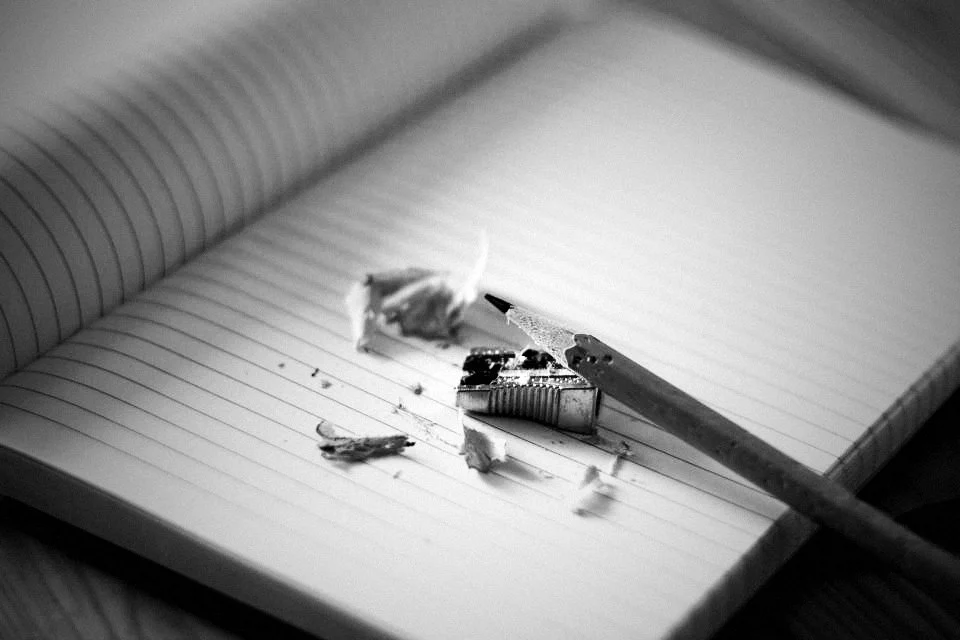
I carry a notebook not to remember things, but to notice them. Writing a line down is a way of looking twice.
For years I tried apps, voice memos and photos of things I meant to think about later. None of them stuck. The notebook did, perhaps because it asks for a little effort: you have to stop, take it out, and decide what is worth keeping.
What goes in it
- Sentences overheard on buses and in queues.
- Questions I do not have answers to yet.
- The first line of things I might write one day.
- Small drawings of buildings, badly done.
Nothing in it is organised. There are no categories, no tags, no index. When I need an idea, I read old pages at random, and the connections appear on their own.
Why paper still wins
Paper is slow in the right way. It does not autocorrect, does not notify, does not suggest. A notebook cannot distract you, which makes it the most focused tool I own.
A notebook is a small habit that quietly organises everything else.
Reading old notebooks
Once a year I read every notebook from the year before, start to finish. It takes an evening and a pot of tea. It is the closest thing I have to a diary, except that it records what I noticed rather than what I did, which turns out to be far more revealing.
Patterns appear that I could never have seen while living them: a question I kept asking in different words, a street I kept returning to, a friend whose sentences fill a surprising number of pages. Some of my best essays began as a pattern I only saw on that one evening.
If you want to start, buy the cheapest notebook you can find. Expensive ones make you afraid of wasting pages, and the whole point is to waste pages generously.


Leave a Reply